Things are changing quickly in the world of marine electronics, with some amazing innovations appearing every few months. There are various electronic devices for yachting, cruising, and boating that fall into four different categories:
PLBs, virtual distress signals, thermal imaging, joystick docking, and other monitoring systems are among the safety and security measures. Wi-Fi, VHF, and smartwatch for communication.Speakers, subwoofers, drones, and other forms of entertainment
Navigation tools include sonar, transducers, radar, autopilots, and radar. Here are some frequently asked questions that people typically have before purchasing boat electronics, followed by our guide below.
What Electronics Do Boats Need?
The solution is straightforward, but you must understand a few crucial concepts regarding boat electronics. The process of learning it may seem a little intimidating, but the best boat electronics can make navigating your vessel simpler than ever. Modern marine electronics and other equipment make it much simpler and less confusing than ever to captain a boat.
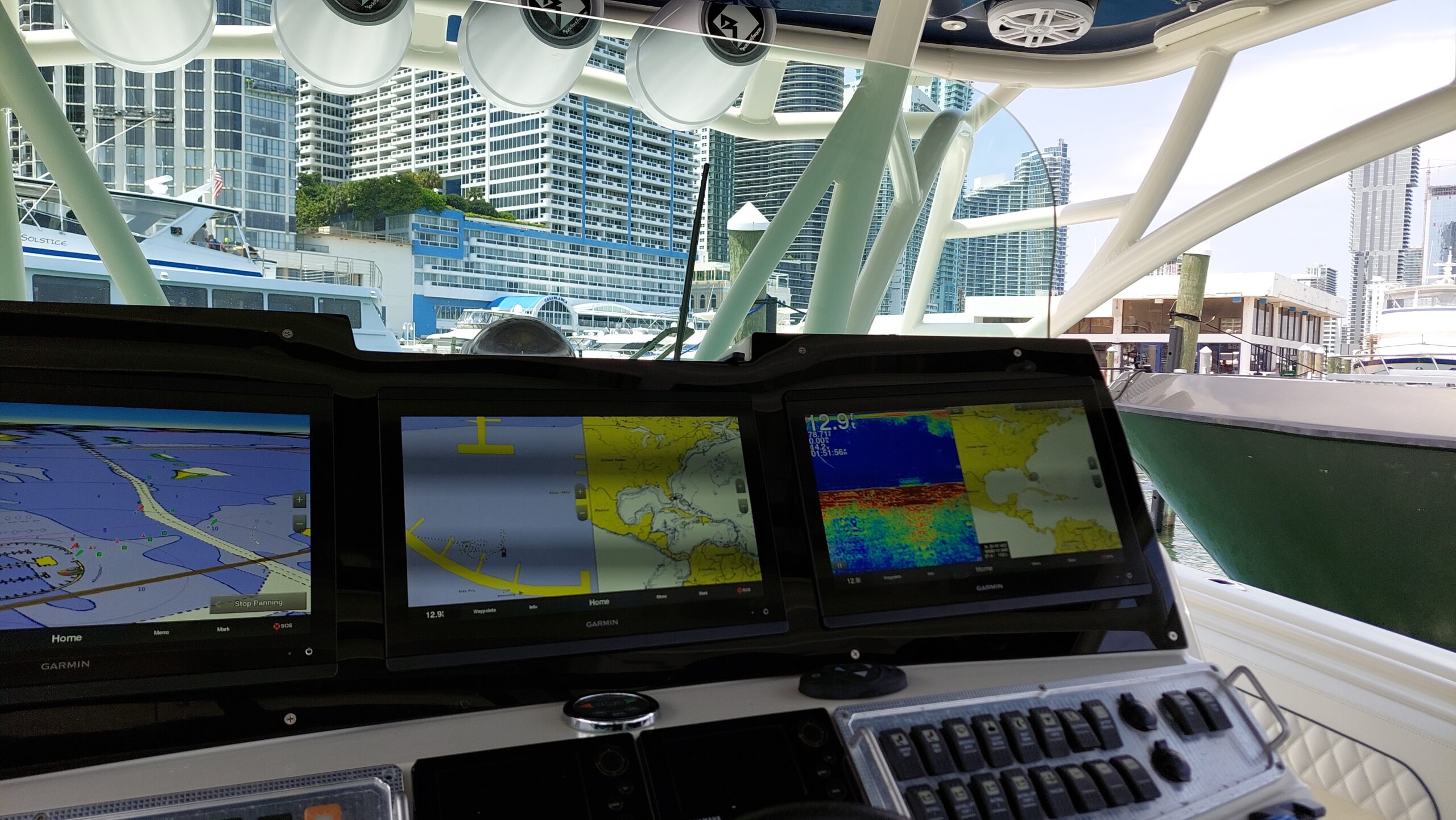
Electronics have facilitated navigational tasks and made them simpler with a few button presses and touch screen swipes. For your boat to be equipped with the best electronics that will enable you to navigate in a more secure and efficient manner, you can find Garmin boat electronics.
You might require the following electronics for your boat:
– Engine monitors and GPS/Chartplotter MFDs
– Fishfinders and depth sounders
– Cellular and Wi-Fi range extenders for VHF radios
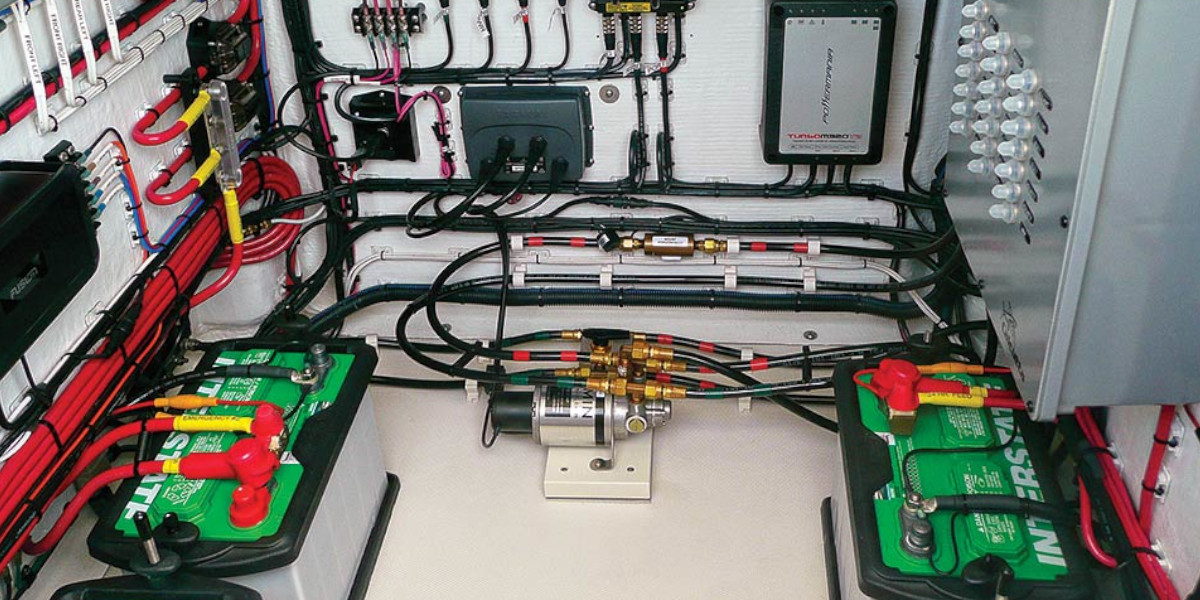
– System for Monitoring Batteries
– AIS\sRadar\sCompass
The purpose of these electronics will now be explained in more detail.
1.GPS/Chartplotter
Without a doubt, you would have benefited from GPS navigation in your vehicle. A boat is the same way. Driving is made much simpler and less confusing as a result.
On an LCD screen, a chartplotter displays the digitalized charts and enables navigation. Your precise location will be displayed, along with various navigational routes and waypoints.
2.Multiple-purpose displays (MFDs)
MFDs, or multifunctional displays, are the brains of the boat. They integrate nearly all systems into a single interface with a touchpad or keypad control, bringing them together at a single point. Garmin MFDs Marine are simple to use and have simplified things for even beginners. It provides access to screens that are very comparable to the smartphone in your pocket. It has a home screen with a variety of pages, including tap to activate, app-like icons for letting you select the functions, and customizable pages for bringing together multiple functions in split-screen mode. If you purchase a new boat with the newest technology integrated into it, you can find the MFDs controlling the marine electronics and the entire boat’s electrical system.
3. Engine watchdogs
Digital gauges like tachometers, engine temperature, and fuel level are available on engine monitors. You can get this functionality from your MFD or from a screen that only displays information about your engine. It is common to have dedicated screens because it is crucial to continuously monitor the power plant. Although standalone screens are an option, engine monitors can take up a lot of room in the MFD.
4. Fishfinders and depth sounders
Fish finders and depth sounders can both be found as standalone devices as well as working in MFDs. These are intended specifically for center consoles, all-purpose fishing boats, and other fishing-specific boats, including smaller, less expensive boats. You can see fish below your boat using these sensors. Additionally, fishfinders can be placed in the front or on the sides.
5. VHF Radio
The VHF radio is the most significant component of the boat’s other electronics. In terms of safety, it is a crucial component of the electronics kit for cars and boats. Additionally, it is a trustworthy means of getting in touch with someone in an emergency. They are easy to use and can either be mounted on the boat or fitted into the electronics box. The VHF radio is the most crucial piece of communication equipment for any boater. The radios’ digital selective calling (DSC) feature has made it possible to transmit location information to the authorities.
6. Cellular and Wi-Fi Range Boosters
On boats, navigation may take you to remote locations, where the mobile signal may be spotty or nonexistent. The range extenders for Wi-Fi and phones come into play here. Even if you are swimming outside of the waters’ usual range, they can still keep you connected to the outside world. A boating booster costs as little as $50.
7. The Battery Monitoring System
You need a monitoring system that can keep you informed about the battery’s level because your battery is what keeps you moving through the water. In addition to a voltmeter, you also need an electronic dipstick for this task in order to monitor every aspect of the battery and detect any developing issues.
8. AIS The automatic identification system (AIS)
Provides a boat with a transponder. It continuously broadcasts the vessel’s name, direction, and speed. When you can’t read the name when hailing the boat over VHS, they can be quite useful. By revealing the travel direction and destination of large vessels nearby, it puts radar one step behind. If your boat is invisible to the radar, it makes you visible to other people.
9. Radar
Radar works similarly to a fish finder in that it can detect objects above as well as below the boat. It is most useful when you are moving through dense fog or at night. A radar will keep you safe by preventing you from coming into contact with large vessels if you wander into a commercial shipping lane.
If you are taking a long route and there is poor visibility, radar is essential. They are primarily used in powerboats to change the course when a big ship is approaching from behind. Online retailers sell used radar for marine electronics on boats.
10. Compass
For easier navigation in the boat, you can also purchase an electronic compass. Knowing your intended course of action and the necessary direction is crucial.
Electronics on boats either use AC or DC power.
Direct Current, or DC, power is typically used on boats. This indicates that low voltage, one-way DC current that originates from batteries flows in this direction. On boats, a lot of the electronics are designed to run on DC power. Battery-powered DC powers your engine(s), running lights, VHF radio, DC lighting system, and other electronics. Larger boats can use a 32 volt system, but typically it is a 12 volt system.
A contrast to this is Alternating Current (AC), which refers to extremely fast forward and reverse current flows at higher voltages of 120 or 220 volts. Some boats with shore power outlets can operate on both DC and AC power sources. Through the use of specific power supply devices, AC can be converted to DC power.
On boats, AC and DC systems typically share a single electrical panel, so it’s crucial to know which one is being used for which system and to never work on a panel that has AC power running from the dock.
Do Boats Typically Sell With The Electronics?
Electronics are standard on only some boats. Some come with a few, while others come with many more. It can be overwhelming to purchase a boat, but you must thoroughly inspect each component before doing so. If your boat does not already have electronics, you can purchase the best boat electronics to make it ideal for navigation. You can search online for boat electronics repair near me to find the best repairing services if any of the electronics on your boat are damaged, which is highly likely given the open-air environment of the boat. However, you can perform boat electronics troubleshooting before seeking repair.
We can install your devices with professionalism and a warranty. Call us: +1 (786) 488-6513